The Social Security Law That Keeps Parents Awake at Night
By Micki, Grassroots Advocate

My husband and I consider ourselves to be informed parents. When our twin sons Zach and KC were diagnosed with intellectual disability in infancy, we tried to learn all we could to be a good mom and dad. We attended educational programs, joined local organizations that focused on families like ours, and did what we thought was best for our sons.
When they reached the age of 18, we were advised to apply for Supplemental Security Income, a federal income program for those 18 and older who are blind, have a disability, or are aged and have very little income. That went without a hitch. A few years later, one of our sons received a letter from Social Security stating that because he had worked for several years in the community, his benefits would switch from SSI to SSDI, Social Security Disability Insurance, a program for those with disabilities who are part-time workers. He qualified because after graduating from high school, he started working as a front-end clerk/bagger at a supermarket. It has always been and because of our son’s disability, will always have to be, part-time work. He has continued to work in this position for 21 years. He is very proud of this achievement. Again, the switch from SSI to SSDI went without us having to complete any paperwork.
During the first few years that he worked, we were still figuring out how much work he could do. On occasion, the store manager wanted him to put in extra hours because another employee called in sick or didn’t show up to work. It was difficult for him to say no, even if he couldn’t really manage the work. We received a few letters from Social Security stating that he earned too much money when that happened. We spoke to someone from Social Security, but nothing was said about him losing out on higher benefits when his parents retired or passed away. Nor was anything explained to us about how much he could earn while still maintaining benefits. Since he continued to receive payments, we assumed the past problems were just that: in the past.
Foolish assumption.
Some 15 years later, in 2016, when my husband turned 66 and applied for Social Security, he requested that Zach and KC receive SSDI benefits as Disabled Adult Children (DAC) under his work record. DAC benefits would be far more generous than our sons’ own benefits because my husband worked for many more years and also earned more. My husband and I were counting on these benefits to help our sons with their living expenses when we were no longer able to provide financial support. My husband was told that our son who was the front-end clerk would never be able to receive DAC benefits because he earned too much money a few times, occurrences that took place 14 and 15 years ago. Social Security sent us a document showing when his income was too high—it was seven times total, and each time was under $40.
What should we do? Everyone we spoke with was stumped, including attorneys who specialize in denied Social Security Disability applications. With much persistence, we eventually found someone who explained that the things our son had paid for to help him work, like the medication he took to help him focus or the costs of his job coach, could be used to offset the income that exceeded Social Security’s requirements. We learned these are called Impairment Work Related Expenses, IRWEs.
Even though we’d been told that throwing away backup documents from tax filings after seven years was safe, we never did. Luckily, we had the receipts showing those costs which filled a box large enough for a 10-ream case of paper. We took it to the local Social Security office and requested that they review the materials and reconsider our son’s denial of DAC. The Social Security employee was taken aback by the number of documents in the box. He said he wasn’t allowed to work overtime and had no idea how long it would take him to go through it all!
After several nerve-wracking months, we heard from Social Security. They reversed their decision. Our son was approved as a DAC!
There are many families like ours who had and/or continue to experience a similar nightmare. Many of our loved ones work part-time in jobs with fluctuating hours which results in income varying from one month to another. Countless families don’t know about IRWEs or understand the complex rules of Social Security. We are all understandably terrified of doing anything that might put our children’s future benefits in jeopardy. Some find it easier to have their family member not work at all, thereby isolating them from the community and depriving them of self-worth.
The current law is a huge disincentive to work and it’s just too complicated.
Our son is now living by himself in the community. Being self-sufficient means the world to him. His DAC benefits along with his limited earnings cover his expenses, such as rent, utilities, groceries, etc. Without the SSDI DAC benefits, he would no longer be able to live independently in the community.
Parents of adults with intellectual disabilities want the assurance that their loved ones will continue to have meaningful lives after they’re gone. Knowing that their adult children can work and maintain DAC benefits is one critical way of guaranteeing that—the law needs to change.
Find out how you can help Micki’s family and others in the same position.



 Jose Velasco is thankful for the incredible journey of fatherhood. The father of two did not foresee the life he and his wife, Deya, and their son and daughter created, together. This Father’s Day, Jose reflects on nearly three decades of being a dad and how disability has rewarded his life in ways he had not imagined when the family began their autism journey. Each day of that journey, Jose has only wanted one thing.

 l love and infinite strength of mothers. We recognize the mother figures and grandmothers who nurture and support us – no matter what. We embrace the challenges of motherhood. We revel in the joys.
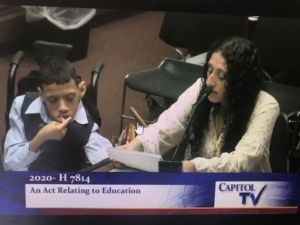 n as a mother extends into advocacy. Working with The Arc Rhode Island, she advocated in the General Assembly in support of special education reform to give parents and guardians more rights in the Individualized Education Program, or IEP, process. In testimony before the Rhode Island House of Representatives, Kendra and Joshua shared challenges with the IEP process for families and why is critical that students with disabilities receive a Free Appropriate Public Education, or FAPE, as mandated by federal and state law. Kendra is also part of a group of parents, guardians, and educators in Rhode Island advocating for the creation of an independent special education ombudsman office to investigate special education disputes and serve as a resource for parents and guardians. The office would also provide an outlet for anonymous reports of possible violations.
 Steve has cerebal palsy. For most of his young life, and like many people with disabilities, he lived with his mom. When Steve was only 22 years old, his mom became very ill. Because she could no longer provide the supports he needed, Steve was forced to move into a nursing home to get the care he could no longer receive in his childhood home. Even though Steve knew he could make it in the community with the right supports, he was forced to make this move. This was because his family was concerned about his well-being if he lived independently, and because they feared the appropriate supports were not available to him.
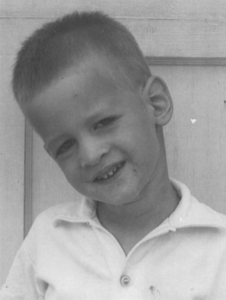 There were no supports available outside of the public schools and the schools were not prepared to serve children with high levels of need. When my brother was kicked out of school at a very young age (before the federal law ensuring a right to education) for his disability-related behaviors, he had nowhere to go except home all day with a very loving caregiver. He missed the routines and rhythms of school and had a hard time staying home while everyone else went to work or school daily. He waited all day for the staggered returns of kids and parents, dinner, and then his beloved ride to the drugstore for a Coke and a long drive listening to rock and roll and beach music on the radio. Jud also had daily trips to the Post Office with our Dad to pick up the mail for his business, trips to the barbershop, church on Sundays, other local gathering places, and a house full of our friends and exchange students who lived with us at various times. He loved all the interaction and was known all over town.
 Sadly, as each of his older siblings began to leave home for college, military service, or otherwise, Jud’s physical size and his inability to control his frustrations and emotions became dangerous for our aging parents. After much searching and trying many approaches, the only available service for someone with his needs was the state institutional system. This was devastating for Jud, for our whole family, and for the many friends who had known him over the years. Jud suffered greatly from the travel distance from his family (even though we visited regularly), home and hometown, friends, and routines. And while there were some wonderful staff who supported him in his new location, we were horrified to learn that he also suffered some terrible abuses– the kinds of things that can be hidden when people who are unable to communicate or be understood cannot tell others what is happening to them. My father found that Jud had been burned with cigarettes and that other men in his unit had been more extensively burned. In other incidents, men in his unit died after being subjected to dangerous restraint methods. He also suffered from toxic environmental conditions, including asbestos and sewage leakage. As a family, we were determined to end these abuses.
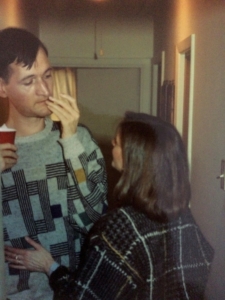 Jud’s experiences fueled my passion to change the system. I worked in Washington to pass federal legislation to move the Medicaid funding bias away from institutions and to build the community service system, making the community the preferred service setting. My advocacy led me to a career in The Arc’s national public policy office, which I joined in 1984. While our systems have evolved since the 70s through the late 80s when my brother was experiencing so much pain, we still have a long way to go. I am happy to report that Jud was eventually able to leave the state institution and live in a group home about 7 minutes from our widowed mother in his beloved hometown for the last 20+ years of his life. Jud also experienced some serious problems in his group home, but those were able to be discovered and remedied because family were nearby and able to observe how he was doing. For those who understood him, Jud continued his mantra: “Stay at the new house; not gonna keep saying it” throughout those years, lest anyone think he would ever want to go back to the institution.